
Many TeamViewer users experience unexpected disconnections or timeouts, and these can be a problem during remote support. Commercial use detection, idle session limits, unstable internet connections, and security software often cause this problem.
We’ll look at the three most common reasons TeamViewer keeps timing out, as well as show you how to fix them step by step.
You might want to try another remote support tool if TeamViewer license limits start to feel confusing. HelpWire offers a reliable free alternative with helpful features for remote support on Mac, Windows, and Linux computers. Learn more.
TeamViewer Commercial Use Detected
This issue usually ends the session after about 1 to 5 minutes. After the disconnect, users often see a “license session limit exceeded” error or a message saying the TeamViewer connection was blocked after a timeout.
Solution:
We have another article that explains how to work around the commercial use detected error in TeamViewer. You can check it out to get more in-depth guidance.
For business use, the only way to avoid errors and use TeamViewer properly is to buy a paid license. But in case you’re using the app for personal reasons, you can submit a review request through the official TeamViewer website to remove the commercial use flag.
Sometimes, this error can still appear even after buying a business license. According to many users, this happens because they did not activate the paid version in the right way. You can find the activation instructions for each paid license on the TeamViewer website.
After you confirm that you activated the license properly, the problem usually goes away. You can contact TeamViewer customer support for further help, should the issue continue.
Idle Session Timeout Issue
Not using the keyboard or mouse for a while is one reason a TeamViewer session timeout happens.
Solution:
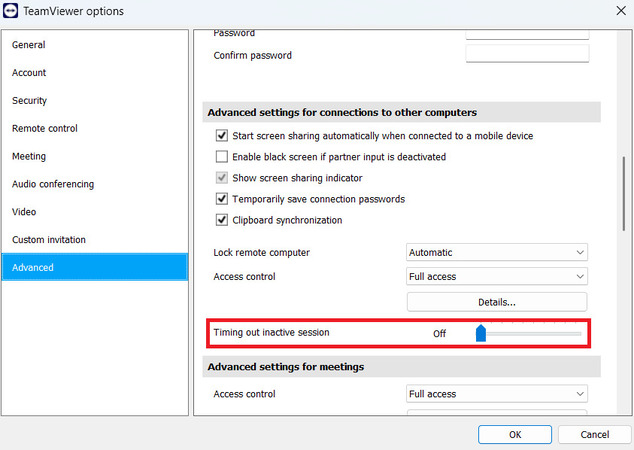
If the app keeps disconnecting, idle sessions or unused license channels might be the reason behind it. Set an inactivity limit to make unused sessions close automatically and prevent the issue of TeamViewer timing out suddenly.
Here’s what to do:
-
Open TeamViewer. Click the gear icon in the top-right corner to go to the Settings.
-
Go to the Advanced section. Scroll until you see the settings for connections to other computers.
-
Find the option for inactive session timeout.
-
Choose how long a session can stay idle before it closes automatically.
-
Click OK to save your changes.
For people overseeing multiple devices under the same license, you can apply the same settings to all of them using a TeamViewer Settings Policy.
After setting the timeout, make sure to check whether all license channels are already in use, since that can also cause connection problems.
Unstable Internet Connection Timeouts
An unstable network can also cause your TeamViewer connection to be blocked after a timeout. The app uses outbound connections, and it tries TCP/UDP port 5938 first for best performance. TeamViewer first tries TCP 443, then TCP 80 if the preferred port isn’t available. Note that the last option is slower and less reliable, plus the tool can’t automatically reconnect there. This is why you may notice TeamViewer keeps timing out more often.
Solution:
- • Check that both devices have a steady internet connection. Look out for sudden Wi-Fi drops, unstable VPN connections, or switching between wireless and mobile data.
- • Also, make sure both devices have an updated version of TeamViewer. Using older versions can cause compatibility problems and slower performance.
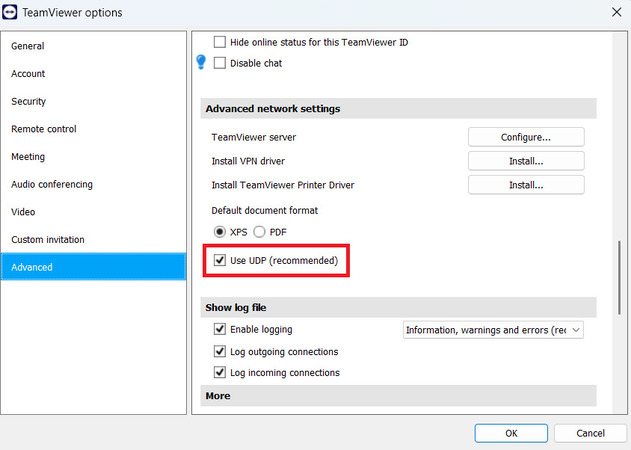
- • TeamViewer support notes that disabling UDP can sometimes help if the connection drops frequently. However, don’t make this a default setting – UDP usually helps establish a faster, more stable connection.
Local security filtering
Sometimes, a firewall or security software blocks some of the app’s traffic. This leads to the TeamViewer connection timeout issues happening unexpectedly.
Solution:
Add TeamViewer to your antivirus or firewall allowlist. Make sure it can send outbound traffic to the required TeamViewer domains.
TeamViewer relies on outbound connections to work properly without a complicated setup. But strict corporate firewalls or aggressive antivirus settings can block the specific pathways it needs to stay connected.
Why HelpWire Is a True Alternative, Not Just Another Short-Term Hack
Every step described above is a patch job, and the problem is still there the next time you open a session. HelpWire sidesteps the issue entirely: there are no session time limits, no commercial use detection, and no license channel caps to worry about. It’s a free TeamViewer alternative for both personal and business use, and you can be up and running in minutes, no signup needed.
HelpWire vs TeamViewer Free: What You Actually Get
| Feature | HelpWire | TeamViewer Free |
|---|---|---|
| Session time limits | ✅ Unlimited | ⚠️ Cuts off after 1–5 min (commercial use detection) |
| Commercial use detection | ✅ None | ⚠️ Triggers automatically, blocks the session |
| Price for business use | ✅ Free | ⚠️ Paid license required |
| Windows, macOS, Linux support | ✅ All three | ✅ All three |
| Unattended access | ✅ Included | ⚠️ Limited to 3 managed devices |
| Setup time | ✅ In a few minutes | ⚠️ Configuration needed to avoid timeouts |
Frequently Asked Questions
The latest free and paid versions of TeamViewer don’t have a set limit on connection or session length.
TeamViewer doesn’t officially restrict free license session time. But some users report that the TeamViewer session timeout occurs after 30 seconds; others notice disconnects after 1 minute. In some cases, connections stay active for up to 5 minutes.
TeamViewer offers different licenses for personal and business purposes. It has a free license for people who will use it personally, together with paid options suitable for commercial organizations.
You can pick the license that works best for you and switch it whenever needed. Your experience may change depending on the license type.
For example, the free version limits your access according to its license rules.